

Sustainability · 2025
In this section50 topics
- Sustainability Policy3 items
- Sustainability Goals & UN SDGs3 items
- Policy Review2 items
- Business Value Chain1 item
- Stakeholder Analysis1 item
- Environmental Policy & Guidelines4 items
- Environmental Policy Review3 items
- Energy — Plan & Guidelines3 items
- Energy — Electricity Consumption1 item
- Energy — Fuel Consumption1 item
- Energy — Targets2 items
- Energy — Performance & Outcomes2 items
- Water — Plan & Guidelines2 items
- Water — Withdrawal, Discharge & Consumption1 item
- Water — Targets2 items
- Water — Performance & Outcomes2 items
- Waste — Plan & Guidelines2 items
- Waste — Generation, Disposal & Recycling1 item
- Waste — Targets2 items
- Waste — Performance & Outcomes2 items
- GHG — Plan & Guidelines3 items
- GHG — Emissions1 item
- GHG — Emissions Verification1 item
- GHG — Principles & Standards1 item
- GHG — Targets1 item
- GHG Targets — Net Zero1 item
- GHG Targets — Carbon Neutrality1 item
- GHG — Performance & Outcomes2 items
- Environmental Legal Incidents1 item
- Social Policy & Guidelines4 items
- Social Policy Review3 items
- Social — Principles & Standards Practised1 item
- Human Rights Due Diligence3 items
- Employees — Plan & Guidelines4 items
- Employees — Workforce1 item
- Employees — Remuneration & Provident Fund1 item
- Employees — Training & Development1 item
- Employees — Occupational Health & Safety1 item
- Employees — Labour Relations1 item
- Employees — Employee Representation2 items
- Employees — Targets2 items
- Employees — Performance & Outcomes2 items
- Customers — Plan & Guidelines4 items
- Customers — Satisfaction Results1 item
- Customers — Targets2 items
- Customers — Performance & Outcomes2 items
- Community & Social — Plan & Guidelines4 items
- Community & Social — Targets2 items
- Community & Social — Performance & Outcomes2 items
- Law Violation Incidents1 item
Sustainability Policy
Has a Sustainability Policy
Yes
Policy Description
The company is committed to conducting business with integrity, ethics, and transparency in its management to ensure reliability. It focuses on creating engagement with stakeholders and having a sound audit system. The company also considers society and the environment to ensure compliance with business standards and integrates sustainability into its development. This includes considering environmental, social, and governance (ESG) dimensions. The company is committed to creating sustainable value for all stakeholders and is prepared to cope with challenges and risks arising from rapidly changing circumstances. This aims to prevent or mitigate the impact of business operations that may affect the company, community, society, and the environment. To build confidence among all stakeholder groups, the company has a strategy focused on becoming a leading hospital business and building partnerships to enhance service efficiency. It aims to establish a brand that covers a diverse customer base and develop specialized physicians and support teams to maintain consistent quality and standards through its corporate strategies.
To demonstrate its commitment to sustainable business practices, at its 2/2023 board meeting on February 28, 2023, the Board of Directors appointed a Sustainability Committee to oversee activities and manage risks ("Sustainability Committee"). This committee is responsible for establishing policies and overseeing the implementation and monitoring of sustainability efforts. The committee will hold a total of six meetings in 2025. The company also encourages its employees to be aware of, prioritize, and participate in integrating sustainability into their operations in accordance with the strategic plan. This will be a key driver of the company's sustainable business growth in the future.
Policy Document Link
https://www.bangkokchainhospital.com/storage/document/sustainability/sustainability-policy-en.pdf
Sustainability Goals & UN SDGs
Has Sustainability Goals
Yes
Goals Description
The company prepares guidelines and goals for sustainable development in respond to the Sustainable Development Goals according to the 13 goals of the United Nations (Sustainable Development Goals: SDGs)
Economic Sustainability
Material Issues
(3) (11) Responsibility on patients
(16) Corporate Governance and Business Code of Conduct.
(16) Privacy and Data security.
(5) (8) (16) Supply chain management.
(8) (9) Technology and innovation development.
Management Approach
• Develop potential and quality of service as well as building confidence among customers.
• Providing patient services according to the standards of HA and JCI.
• Conduct business under strict, careful risk management, with transparent, fair, and traceable corporate governance.
• Conduct business activities correctly and appropriately in strict accordance with relevant laws and regulations.
• Develop the potential to protect personal information of stakeholders.
• Prepare guidelines for exercising rights related to personal data.
• Continuously assess risks annually
• Develop potential and quality of service as well as building confidence among customers.
• Promote the development of innovative medical services using technology to create business opportunities.
Social Sustainability
Material Issues
(3) (5) (8) (10) Organizational and Employee Development
(1) (3) (11) Access to Medical Services
(3) (8) Occupational health and safety
(3) (5) (8) (10) (16) Human Rights Management
(3) (4) (10) Development and Engagement with Community
Management Approach
• Organize training to develop employees' knowledge and skills for effective work performance.
• Provide an appropriate remuneration and benefits and promote work progress.
• Creating participation of employees and stakeholders in all sectors to create sustainable value for society and participate in the community.
• Participate in providing medical service to insured persons under social security program
• Establish hospitals in the border areas of the country to increase access to effective medical care services.
• Raise awareness and change working behavior to create a safety culture.
• Respect human rights, equality, non-discrimination, and diversity of individuals.
• Support public benefit activities for society
• Promote health knowledge and access to medical services for society and communities.
Environmental Sustainability
Material Issues
(6) (7) (12) Resource Management (Waste, Water, and Energy)
(13) Climate Resilience
Management Approach
• Support the correct management of each type of waste
• Reduce the amount of waste from its source, i.e. changing behavior to reduce plastic usage.
• Campaign for economical water usage.
• Organize activities to create awareness of energy conservation among employees, partners, customers/patients.
• Change equipment in hospitals and offices to energy-saving ones.
• Install alternative energy that reduces energy use and reduces the creation of greenhouse gases.
UN Sustainable Development Goals
| SDG Goal |
|---|
| Goal 1 No Poverty |
| Goal 3 Good Health and Well-being |
| Goal 4 Quality Education |
| Goal 5 Gender Equality |
| Goal 6 Clean Water and Sanitation |
| Goal 7 Affordable and Clean Energy |
| Goal 8 Decent Work and Economic Growth |
| Goal 9 Industry, Innovation and Infrastructure |
| Goal 10 Reduce Inequalities |
| Goal 11 Sustainable Cities and Communities |
| Goal 12 Responsible Consumption and Production |
| Goal 13 Climate Action |
| Goal 16 Peace, Justice and Strong Institutions |
Policy Review
Policy Reviewed This Year
No
Policy Changed This Year
No
Business Value Chain
Value Chain Description
The Company has always prioritized on treating their stakeholders. The relevant stakeholders throughout the business value chain are identified and reviewed from upstream to downstream covering the main and supporting activities of the business. In addition, the Company has assessed the importance of stakeholders with 2 factors: Influence and interest on the Company to divide stakeholders into 4 groups as follow: Stakeholders to create close participation, i.e. patients and customers, employee, stakeholders to maintain satisfaction, i.e. shareholders and investors, creditors, and business partners, stakeholders to continually provide information, i.e. communities and society, government agencies, and stakeholders that need to be monitored, i.e. commercial competitors and the mass media. In conclusion, stakeholder groups and related activities can be summarized as follows:
Stakeholder Analysis
Stakeholder Analysis
| Stakeholder Type | Stakeholders | Stakeholder Expectations | Response to Expectations | Communication Activities |
|---|---|---|---|---|
| External stakeholders | 2923 · Description: Customers · 2936 · Other name: Patient and Customer · Description: Others | Delivery of Quality Healthcare
• Standardized medical services with safety and good code of conduct.
• Satisfactory from good services
• Correct, quick, and convenient health information.
• Appropriate medical service fees
Data Privacy & Security
• privacy and security of patient information and treatment information | • Provide services to patients in accordance with Hospital Accreditation (HA), and certification of international standards: Joint Commission International (JCI).
• Open for opinions, suggestions, and complaints to improve services
• Organize training to provide health knowledge
• Assign a customer relations department to be responsible for evaluating expenses incurred, and inform patients in advance.
• Provide the system to securely protect patient information and treatment information. | 2941 · Description: Online Communication · 2947 · Description: Satisfaction Survey · 2948 · Description: Training / Seminar |
| Internal stakeholders | 2921 · Description: Employees | Organization & Human Resource Development
• Learning and developing skills and increase potential in accordance with business changes
• Being treated fairly and equally.
• Appropriate compensation and benefits as well as career growth opportunities
• Participation in activities related to the Company's operations.
Occupational Health and Safety
• Management of safety and environment in working according to standards. | • Provide training, develop, and enhance work skills for employees.
• Listen to opinions, suggestions and understand the needs of employees.
• Communicate information and related policies for employees, i.e. human rights policy
• Providing opportunities for employees to participate in various activities.
• Set compensation that is appropriate to your responsibilities and provide good welfare
• Improving the working environment to be in accordance with the principles of occupational health and safety at work. | 2938 · Description: Visit · 2942 · Description: Internal Meeting · 2946 · Description: Employee Engagement Survey · 2947 · Description: Satisfaction Survey · 2948 · Description: Training / Seminar |
| Internal stakeholders | 2904 · Description: Investors or investment institutions · 2913 · Description: Shareholders | Financial Performance
• Good performance and business growth.
• Good corporate governance and transparency
• Gaining good returns and appropriate dividend payments
• Receiving information related to the business in a transparent and continuous manner
Environment & Social Responsibility
• Conducting business with sustainability and continuity in mind as well as being responsible for society, community, and environment. | • Create good performance, pay appropriate dividends according to the Company’s policy.
• Formulate policies and practices to ensure the business operations are under strict, careful risk management with transparent, fair, and verifiable.
• Disclose important and necessary information about the Company's operations correctly, completely, and in a timely.
• Update information on the Company website to be up to date and complete.
• Open to opinions and suggestions.
| 2941 · Description: Online Communication · 2944 · Description: Annual General Meeting (AGM) · 2949 · Other name: Organizing activities between the Company, investors, and shareholders throughout the year both online and offline i.e. Analyst Meeting, Opportunity Day, Company Visit, Conference Call, Roadshow · Description: Others |
| External stakeholders | 2894 · Description: Creditor | Financial Performance
• Regain the principal and interest back according to the agreed upon contract conditions.
• Good performance and business growth.
Corporate Governance & Transparency
• Good corporate governance with transparency management.
| • Create good performance, repay principal and interest according to contract conditions.
• Conduct business under strict, careful risk management, with transparent, fair, and traceable corporate governance.
• Disclosing important and necessary information about the company's operations.
| 2941 · Description: Online Communication · 2949 · Other name: Meeting to report performance in every quarter. · Description: Others |
| External stakeholders | 2899 · Description: Suppliers | Supply Chain Management
• Transparent and fair negotiations or agreements.
• Opportunity to conduct business together in the future.
Data Privacy & Security
• Privacy and security of commercial agreements or data | • Maintain good relationships with business partners, Disclose auction and trading information transparently and equally.
• Regularly listen and exchange opinions together.
• Promote partners to conduct sustainable business.
• Ensure the secure protection of partners' information.
| 2938 · Description: Visit · 2943 · Description: External Meeting |
| External stakeholders | 2902 · Description: Community · 2928 · Description: Society | Environment & Social Responsibility
• Improving access to medical services to promote a good life quality.
• Promoting and supporting social and community activities, as well as providing knowledge about health promotion.
• Operations with the least impact on communities and society.
Climate Change
• Proper management of climate change
| • Affiliated hospitals provide services to insured persons under the social security program.
• Expanding affiliated hospitals to border areas with lack of access to medical services.
• Provide opportunities for the community to participate in activities or projects.
• Continuously support budget for community and social activities.
• Provide channels for listening to opinions, complaints and suggestions.
| 2940 · Description: Social Event · 2945 · Description: Complaint Reception |
| External stakeholders | 2931 · Description: Government agencies and Regulators | Corporate Governance & Transparency
• Compliance with the law and regulations related. | • Conduct business activities correctly and appropriately according to laws and regulations, and strictly follow related regulations. | 2949 · Other name: Listen and provide opinions, suggestions on government regulations and practices. · Description: Others |
| External stakeholders | 2898 · Description: Competitors | Corporate Governance & Transparency
• Conduct business under the rules of good and fair competition.
| • Promote free trading.
• Treat its competitors with fair competition | 2949 · Other name: Follow industry trends. · Description: Others |
| External stakeholders | 2929 · Description: Media | Corporate Governance & Transparency
• Gain accurate, fast and timely information equally.
• Provide the media with an opportunity to meet and talk with senior executives.
| • Disclose important and necessary information about the Company's operations.
• Open to opinions suggestions from the media. | 2939 · Description: Press Release · 2949 · Other name: Disclose information through the Stock Exchange of Thailand, website, telephone, email, annual rep · Description: Others |
Environmental Policy & Guidelines
Has an Environmental Policy
Yes
Policy Description
Bangkok Chain Hospital Public Company Limited places strong emphasis on sustainable development by conducting its business based on environmental responsibility under the supervision of the Sustainability, Corporate Governance, and Risk Management Committee. The Company implements a systematic policy for natural resource and environmental conservation, focusing on identifying material sustainability issues to guide the management of environmental risks. Key initiatives include enhancing water resource efficiency, reducing greenhouse gas emissions, and promoting the use of clean energy. These efforts cover all aspects of operations from sustainable sourcing, energy reduction, and waste management to biodiversity conservation. The Company integrates innovation and best practices to minimize environmental impacts and to enhance sustainable resource efficiency.
Moreover, the Company actively collaborates with government agencies and external organizations on environmental conservation projects in alignment with international standards. This reflects its commitment to addressing today’s societal challenges and adapting to rapidly changing climate conditions. The Company strives to reduce both direct and indirect environmental impacts from its operations, for the collective benefit of its personnel, and in fulfilling its responsibilities to society, local communities, and stakeholders. The Company has also established the following key environmental practices.
Energy Management: Focuses on efficient energy use, reducing electricity consumption, and promoting the use of clean renewable energy sources.
Water Management: Encourages water conservation and efficient use, aiming to reduce water consumption across the organization.
Waste Management: Emphasizes waste reduction, effective waste segregation, and recycling to minimize environmental impact.
Renewable Energy Management: Promotes the use of renewable energy, such as solar power, to reduce greenhouse gas emissions.
Pollution Management: Controls air and noise pollution, including preventing pollution from energy and resource use.
Biodiversity Conservation: Minimizes operational impacts on ecosystems and the environment by controlling the use of chemicals.
Greenhouse Gas Management: Considers greenhouse gas emissions from operations and works towards reducing these emissions.
Policy Document Link
https://sustainability.bangkokchainhospital.com/en/environmental/climate-resilience
Environmental Guidelines
| Guideline |
|---|
| Electricity Management |
| Fuel Management |
| Renewable/Clean Energy Management |
| Water Management |
| Waste Management |
| Biodiversity Management |
| Greenhouse Gas and Climate Change Management |
| Air Quality Management |
| Noise Pollution Management |
Environmental Policy Review
Policy Reviewed This Year
Yes
Review Details
Changes in Environmental Targets
1. Energy Management
Previous target To reduce electricity consumption of all hospitals in the network per total revenue by 0.3 percent by 2027, compared with the 2024 base year.
New target To reduce electricity consumption per THB 1 million of revenue by 5 percent compared with the previous year (kWh).
2. Water Resource and Water Quality Management
Previous target To reduce the water consumption ratio by 0.3 percent by 2027 compared with the 2024 base year, through collaboration among hospital branches to implement water-saving initiatives, such as replacing conventional faucets with automatic faucets in high-usage areas.
New target To reduce total water consumption per THB 1 million of revenue by 5 percent compared with the previous year.
3. Waste Management
Previous target To reduce waste generated from hospital operations across the network per total revenue by 0.3 percent by 2027 compared with the 2024 base year.
New target Increase the proportion of waste and materials that are reused or recycled by 5% compared to the previous year.
4. Greenhouse Gas Management and Climate Change
Previous target To reduce greenhouse gas emissions per total revenue by 0.3 percent by 2027 compared with the 2023 base year.
New target To reduce direct and indirect greenhouse gas emissions (Scope 1 and Scope 2) by 5 percent compared with the previous year (ton CO2e)
1
Policies & Guidelines Changed
| Change |
|---|
| Electricity Management |
| Water Management |
| Waste Management |
| Greenhouse Gas and Climate Change Management |
Energy — Plan & Guidelines
Has an Energy Management Plan
Yes
Plan Description
The Company recognizes that hospital operations require a significant amount of electricity. Therefore, it aims to increase the proportion of renewable and clean energy use in order to reduce dependence on fossil fuel–based energy sources and support environmentally responsible business operations. The Company has continuously installed solar power generation systems (Solar Cells) on building rooftops and parking areas across hospitals within the network, while expanding installations annually to increase the use of renewable energy within the organization. At present, solar cell systems have been installed at a total of 10 locations, generating 3,495,146.76 kilowatt-hours of electricity per year, representing 5.45% of the Company’s total electricity consumption. In addition, the Company promotes the use of clean energy in other forms, such as installing electric vehicle (EV) charging stations within hospital premises to support employees and visitors who use electric vehicles. These initiatives contribute to the promotion of clean energy use and the reduction of indirect greenhouse gas emissions in the long term.
In addition, the Company places importance on efficient energy management within the organization by assigning the Energy Conservation Committee (ENC), comprising representatives from various departments within the hospitals, to be responsible for establishing policies, planning, and monitoring the implementation of energy efficiency measures on an ongoing basis. The Company has implemented a range of energy conservation initiatives, including providing training to raise employee awareness on energy conservation, installing communication materials to promote efficient energy use in various areas of the hospitals, encouraging the use of stairs instead of elevators for one to two floors to reduce unnecessary energy consumption, switching off lights after use, and setting air-conditioning temperatures at an appropriate level of 25 degrees Celsius. Furthermore, the Company has improved equipment and systems to enhance efficiency, such as replacing lighting with energy-saving LED bulbs and improving the efficiency of the cooling tower system by installing energy-saving fan blades. These measures help reduce electricity consumption, enhance ventilation efficiency, and extend the operational lifespan of the overall system.
Plan Document Link
https://sustainability.bangkokchainhospital.com/en/environmental/climate-resilience
Energy — Electricity Consumption
Electricity Consumption
| Metric | Current Year | Previous Year | Two Years Ago |
|---|---|---|---|
| Total electricity consumption within the organization (Kilowatt-Hours) | 59,535,916 | 56,728,311.05 | 59,309,340 |
| Electricity purchased for consumption from non-renewable energy sources (Kilowatt-Hours) | 56,040,769.24 | 54,070,288.95 | 59,309,340 |
| Electricity purchased or generated for consumption from renewable energy sources (Kilowatt-Hours) | 3,495,146.76 | 2,658,022.1 | 0 |
Energy — Fuel Consumption
Fuel Consumption
| Metric | Current Year | Previous Year |
|---|---|---|
| Jet fuel (Litres) | 0 | 0 |
| Diesel (Litres) | 394,248.15 | 438,043.16 |
| Gasoline (Litres) | 19,316.19 | 17,683.58 |
| Fuel oil (Litres) | 0 | 0 |
| Crude oil (Barrels) | 0 | 0 |
| Natural gas (Standard cubic feet) | 0 | 0 |
| LPG (Kilograms) | 162,240 | 208,309.91 |
| Steam (Metric tonnes) | 0 | 0 |
| Coal (Metric tonnes) | 0 | 0 |
Energy — Targets
Has Set Targets
Yes
Targets
| Target | Base Year | Base Year Value | Target Year | Target Change (%) | Unit |
|---|---|---|---|---|---|
| Reduction of electricity purchased for consumption | 2,024 | 56,728.31 | 2,025 | 5 | Megawatt-Hours |
Energy — Performance & Outcomes
Has Performance Results
Yes
Performance Description
The company is committed to operating in line with sustainable development principles, placing strong emphasis on energy efficiency to minimize environmental impacts and those on surrounding communities. This is particularly important within the company’s hospital group, where energy consumption is consistently high. To address this, the company has focused on improving operational processes while also fostering awareness of energy conservation across all staff levels through structured training, educational programs, and ongoing awareness campaigns. These efforts aim to enhance energy management efficiency throughout the organization.
In 2025, the company continued to implement energy conservation measures, focusing on fostering efficient and appropriate energy usage behaviors. Initiatives included encouraging employees to use stairs instead of elevators, turning off lights and electrical appliances when not in use, and setting air conditioning units to 25 degrees Celsius a temperature that balances comfort and energy savings. Informational signage was also installed throughout hospital facilities to promote ongoing energy-conscious behavior. On the technical side, the company upgraded its infrastructure by replacing all indoor lighting with high-efficiency LED bulbs. Additionally, energy-saving fans were installed in cooling towers, and window films were applied to building glass to reduce heat gain, thereby easing the load on air conditioning systems one of the main contributors to energy consumption. Another notable initiative is the “Big Cleaning Day,” which invites all employees to participate in cleaning hospital premises. This activity not only improves workplace efficiency and environment but also indirectly contributes to energy reduction. In response to technological advancements and evolving user needs, the company also installed Electric Vehicle (EV) charging stations at hospital premises. This initiative supports the use of clean energy in transportation and helps reduce greenhouse gas emissions from the transport sector.
Furthermore, the Company has initiated the adoption of renewable energy by installing solar power generation systems (solar cells) on the rooftops of buildings and parking areas across hospitals within its network. In 2024, the Company expanded the installation to two additional hospitals, bringing the total number of hospitals equipped with solar cell systems to ten. These include Kasemrad International Hospital Aranyaprathet, Kasemrad Hospital Prachinburi, KasemradHospital Saraburi, Kasemrad Hospital Sriburin , Kasemrad Hospital Bangkae , Kasemrad International Hospital Rattanatibeth, Kasemrad Hospital Pathumthani, Kasemrad Hospital Chachoengsao, Kasemrad Hospital Maesai , and Kasemrad Hospital Prachachuen. In the past year, the Company also purchased a total of 3,495,146.76 kilowatt-hours of electricity from renewable energy sources, accounting for 5.45% of its total electricity consumption. This reflects the Company’s commitment to reducing its reliance on fossil fuel-based energy sources.
These initiatives have significantly reduced electricity consumption in both usage volume and system efficiency, especially in air conditioning and lighting two major contributors to energy usage. By improving infrastructure and promoting energy-conscious behavior among staff, the company has cultivated an organizational culture that values environmental sustainability and demonstrates tangible corporate social responsibility. This transformation not only helps lower energy costs but also propels the company toward becoming an environmentally responsible business, fully aligned with sustainable development goals.
1
Water — Plan & Guidelines
Has a Water Management Plan
Yes
Plan Description
In 2025, the company recognized the importance of effective water and wastewater management amid the intensifying impacts of climate change, which have led to challenges such as droughts, floods, and restricted access to water resources. To ensure sufficient water supply across its network of hospitals and to mitigate the impact on surrounding communities and the environment, the company implemented a range of measures focused on efficient water usage.
One of the key measures is the campaign to encourage employees and service users to use water efficiently. Emphasis is placed on the importance of ensuring that water taps are turned off completely after use and maintaining the plumbing system to ensure it is always in working condition, thereby reducing water wastage due to malfunctioning or deteriorated equipment. Additionally, the system is continuously monitored to ensure that water usage at every stage is as efficient as possible. This also includes the installation of automatic faucets, which help reduce water usage when not in use, further improving water efficiency.
In terms of wastewater management, the company engaged specialized external providers to oversee and improve its wastewater treatment systems. This includes regular sampling and analysis of discharged water to monitor its quality. These actions ensure that wastewater treatment processes comply with environmental standards and reflect the company’s commitment to responsible environmental practices and long-term sustainability goals.
Water — Withdrawal, Discharge & Consumption
Water Withdrawal, Discharge & Consumption
| Metric | Current Year | Previous Year | Two Years Ago |
|---|---|---|---|
| Total water withdrawal (Cubic meters) | 716,593.55 | 700,867 | 759,530 |
| Total water withdrawal by third-party water (Cubic meters) | 670,493.55 | 700,867 | 759,530 |
| Total water withdrawal by surface water (Cubic meters) | 0 | 0 | 0 |
| Total water withdrawal by groundwater (Cubic meters) | 46,100 | 0 | 0 |
| Total water withdrawal by seawater (Cubic meters) | 0 | 0 | 0 |
| Total water withdrawal by produced water (Cubic meters) | 0 | 0 | 0 |
| Percentage of wastewater treated before discharge (%) | 100 | 100 | |
| Total water discharge (Cubic meters) | 557,751.4 | 560,693.6 | |
| Total water discharge to third-party water (Cubic meters) | 0 | 0 | |
| Total water discharge to surface water (Cubic meters) | 557,751.4 | 560,693.6 | |
| Total water discharge to groundwater (Cubic meters) | 0 | 0 | |
| Total water discharge to seawater (Cubic meters) | 0 | 0 | |
| Total water consumption (Cubic meters) | 716,593.55 | 700,867 | 759,530 |
| Recycled water (Cubic meters) | 0 | 0 | 0 |
Water — Targets
Has Set Targets
Yes
Targets
| Target | Base Year | Base Year Value | Target Year | Target Change (%) | Unit |
|---|---|---|---|---|---|
| Reduction of water withdrawal | 2,024 | 700,867 | 2,025 | 5 | Cubic meters |
Water — Performance & Outcomes
Has Performance Results
Yes
Performance Description
In 2025, the company acknowledged the growing significance of water resource management in the context of escalating climate change impacts, which have led to droughts, floods, and increased limitations in water accessibility. As a result, the company is committed to sustainable water management practices. Throughout the year, total water consumption reached 716,593.55 cubic meters, with a water use intensity of 59.54 cubic meters per one million baht of revenue. The total water consumption decreased by 2.24% compared to 2024. The company implemented several conservation measures, including campaigns encouraging employees and service users to turn off water taps completely when not in use, maintaining plumbing systems in working order, and replacing conventional faucets with automatic systems in high-use areas such as patient restrooms. In addition, training sessions were conducted to raise awareness on efficient water use.
To further strengthen its approach to water security, the company utilized the Aqueduct Water Risk Atlas developed by the World Resources Institute to assess water-related risks across all 15 affiliated hospitals and clinics. The assessment revealed that Kasemrad Hospital Chachoengsao, Kasemrad Hospital Prachinburi and Kasemrad Hospital Ramkhamhaeng Hospitals are located in areas with “extremely high” water risk, accounting for 20.00% of the total facilities. Meanwhile, 26.70% of the hospitals were categorized under “high” risk, and 53.30% fell within the “medium-high” risk category. These findings highlight the urgent need for strategic planning and the implementation of water management measures to protect operational continuity and reduce potential impacts on surrounding communities.
In 2025, the hospitals under the Bangkok Chain Hospital Public Company Limited consistently conducted water quality analyses. The results confirmed that the water used across the network met the standards stipulated by the Department of Health under the Public Tap Water Quality Standards Notification B.E. 2563 (2020). Throughout the year, there were no complaints from stakeholders regarding water quality, underscoring the company’s commitment to comprehensive and efficient water resource management. In terms of wastewater management, the company engaged specialized external service providers to oversee and enhance the wastewater treatment systems. Regular monitoring and testing of wastewater quality were carried out, including indicators such as Coliform and Coliform Count, which were measured at various locations within the hospital facilities on an annual basis. The 2025 test results confirmed that all wastewater quality indicators complied with the standards outlined in the Ministry of Natural Resources and Environment Notification on the Control of Wastewater Discharge from Certain Types and Sizes of Buildings B.E. 2548 (2005). Treated wastewater that met legal quality standards was appropriately discharged into public sewer systems. These operational practices not only reflect effective water management but also demonstrate the company’s environmental responsibility and alignment with the principles of long-term sustainable development.
1
Waste — Plan & Guidelines
Has a Waste Management Plan
Yes
Plan Description
Waste management represents a significant environmental challenge, particularly in the healthcare service sector, which involves the extensive use of disposable materials. The company and its affiliated hospitals are fully aware of the impact that waste can have on human health, the environment, and surrounding communities. In response, the company has prioritized the efficient reduction of waste through initiatives aligned with the 3Rs principle Reduce, Reuse, and Recycle. These measures aim to minimize the use of unnecessary materials, reduce single-use waste, and increase the value of materials that can be processed and reused.
To support these efforts, the company established an Environment of Care Committee, which serves as the primary mechanism for policy development, operational planning, and oversight of waste management practices across all categories general waste, recyclable waste, infectious waste, and hazardous waste. The committee ensures that all waste is managed in compliance with applicable laws and regulations, while also safeguarding the health and safety of patients, healthcare personnel, visitors, and surrounding communities.
In addition, the Environment of Care Committee works in close collaboration with the Prevention and Control Infection Committee to oversee waste segregation, proper storage practices, and the delivery of training and education to both staff and contractors working within hospital premises. These efforts aim to foster a clear understanding and awareness of safe and environmentally responsible waste management practices. The overarching goal is to ensure that all types of waste generated through healthcare services are managed correctly and efficiently, with no long-term adverse impact on the environment.
Waste — Generation, Disposal & Recycling
Waste Generation, Disposal & Recycling
| Metric | Current Year | Previous Year | Remark |
|---|---|---|---|
| Total waste generated (Kilograms) | 3,162,777.57 | 2,640,951.67 | |
| Non-hazardous waste (Kilograms) | 2,446,148.03 | 1,942,392.39 | |
| Non-hazardous waste - Landfilling (Kilograms) | 2,446,148.03 | 1,942,392.39 | |
| Non-hazardous waste - Incineration (with energy recovery) (Kilograms) | 0 | 0 | |
| Non-hazardous waste - Incineration (without energy recovery) (Kilograms) | 0 | 0 | |
| Non-hazardous waste - Other disposal operations (Kilograms) | 0 | 0 | |
| Hazardous waste (Kilograms) | 716,629.54 | 698,559.28 | |
| Hazardous waste - Landfilling (Kilograms) | 30,079.47 | 17,415.48 | |
| Hazardous waste - Incineration (with energy recovery) (Kilograms) | 0 | 0 | |
| Hazardous waste - Incineration (without energy recovery) (Kilograms) | 686,550.07 | 681,143.8 | Infectious waste |
| Hazardous waste - Other disposal operations (Kilograms) | |||
| Total reused/recycled waste (Kilograms) | 257,110.7 | 278,073.67 | |
| Reused/Recycled non-hazardous waste (Kilograms) | 257,110.7 | 278,073.67 | |
| Reused non-hazardous waste (Kilograms) | 0 | 0 | |
| Recycled non-hazardous waste (Kilograms) | 257,110.7 | 278,073.67 | |
| Reused/Recycled hazardous waste (Kilograms) | 0 | 0 | |
| Reused hazardous waste (Kilograms) | 0 | 0 | |
| Recycled hazardous waste (Kilograms) | 0 | 0 |
Waste — Targets
Has Set Targets
Yes
Targets
| Waste Type | Disposal Approach | Target | Target Year | Target Change (%) | Unit |
|---|---|---|---|---|---|
| Non-hazardous waste | 2758 · Description: Reuse · 2759 · Description: Recycle · 2760 · Description: Landfilling | Increase waste utilization | 2,025 | 5 | Kilograms |
Waste — Performance & Outcomes
Has Performance Results
Yes
Performance Description
Bangkok Chain Hospital Public Company Limited conducts its business with a strong commitment to environmental responsibility under the oversight of the Sustainability Committee, Corporate Governance, and Risk Management. The company is focused on achieving the highest efficiency in managing waste, by-products, and medical supplies to minimize environmental impact and promote sustainable operations.
Furthermore, the Company places importance on effective waste management by implementing waste segregation practices to enable reuse and recycling, aiming to reduce the amount of waste requiring disposal and minimize environmental impacts. The Company has also participated in the Low Emission Support Scheme (LESS) under the Thailand Greenhouse Gas Management Organization (Public Organization) to demonstrate its commitment to reducing greenhouse gas emissions from organizational activities. Through this initiative, waste segregation and recycling programs have been implemented across hospitals within the Company’s network, promoting waste separation at the source and ensuring that recyclable materials are properly recovered and reused, thereby reducing the volume of waste sent for disposal and lowering greenhouse gas emissions associated with waste management processes. As a result, these initiatives have contributed to a total reduction of 1,245.321 tonnes of carbon dioxide equivalent , reflecting the effectiveness of the Company’s waste management and resource efficiency practices in supporting sustainable business operations.
To ensure compliance with legal requirements and established standards, the company has established an Environment of Care Committee. This committee is responsible for formulating policies, planning, and overseeing the management of all types of waste. It also collaborates with the Infection Prevention and Control Committee to supervise waste segregation and storage, in addition to providing training for both staff and contractors. The performance in managing waste and by products has been well received by stakeholders, with no reported issues related to environmental concerns or the management of medical supplies, thereby underscoring the company’s commitment and responsibility toward society and the environment in its sustainable business practices.
GHG — Plan & Guidelines
Has a GHG Management Plan
Yes
Plan Description
The Company places great importance on reducing environmental impacts from its business operations, particularly the management of greenhouse gas emissions, which are a key driver of climate change. In this year, the Company has strengthened its greenhouse gas management efforts by establishing climate-related targets in line with international approaches, aiming to achieve Carbon Neutrality by 2030 and Net Zero Greenhouse Gas Emissions by 2050. These commitments support sustainable business operations and align with global efforts to mitigate climate change.
To support the achievement of these targets, the Company has begun developing an organizational greenhouse gas management system by collecting and monitoring greenhouse gas emission data from operational activities across hospitals within its network, covering the Company’s overall business operations. The data is used to assess the Carbon Footprint of Organization (CFO) and serves as an important baseline for developing long-term strategies and measures to reduce greenhouse gas emissions. In this regard, the Company primarily focuses on monitoring and managing emissions under Scope 1 and Scope 2, which include direct emissions from organizational activities and indirect emissions from electricity consumption.
In addition, the Company has continuously implemented measures to reduce greenhouse gas emissions from its operations. These include improving energy efficiency, installing solar rooftop systems at hospitals within the network, and promoting effective waste management through waste segregation at the source to reduce the amount of waste sent for disposal and minimize greenhouse gas emissions from waste treatment processes. The Company also encourages environmentally friendly behaviors among employees, such as efficient energy use, responsible resource consumption, and raising environmental awareness through ongoing communication and training programs. These efforts support the Company’s commitment to sustainable business growth while maintaining environmental responsibility.
Plan Document Link
https://sustainability.bangkokchainhospital.com/en/environmental/climate-resilience
GHG — Emissions
GHG Emissions
| Metric | Current Year | Previous Year | Two Years Ago | Remark |
|---|---|---|---|---|
| Total GHG emissions (Metric tonnes of carbon dioxide equivalent) | 30,700 | 23,843.6 | 29,672.46 | In 2025, the Company expanded the scope of its greenhouse gas emissions data collection to include the operational activities of all 11 companies within the Group. |
| Total greenhouse gas emissions 1 (Metric tonnes of carbon dioxide equivalent) | 2,290 | 2,756.19 | ||
| Total greenhouse gas emissions 2 (Metric tonnes of carbon dioxide equivalent) | 28,410 | 21,087.41 | 29,672.46 | |
| Total greenhouse gas emissions 3 (Metric tonnes of carbon dioxide equivalent) |
GHG — Emissions Verification
Emissions Verified by a Third Party
No
GHG — Principles & Standards
Principles & Standards Applied
| Standard |
|---|
| 2671 |
| 2672 |
| 2676 |
| 2678 |
GHG — Targets
Has Set GHG Targets
Yes
GHG Targets — Net Zero
Net Zero Targets
| Emission Scope | Base Year | Base Year Emissions | Near-term Target Year | Near-term Target Change (%) | Long-term Target Year | Long-term Target Change (%) | Target Year | Target Change (%) | Unit |
|---|---|---|---|---|---|---|---|---|---|
| 2715 | 2,024 | 23,843.6 | 2,025 | 5 | 2,050 | 100 | 2,025 | 5 | Metric tonnes of carbon dioxide equivalent |
GHG Targets — Carbon Neutrality
Carbon Neutrality Targets
| Emission Scope | Carbon Neutrality Certified | Base Year | Base Year Emissions | Target Year | Target Change (%) | Unit |
|---|---|---|---|---|---|---|
| 2715 | N | 2,024 | 23,843.6 | 2,030 | 10 | Metric tonnes of carbon dioxide equivalent |
GHG — Performance & Outcomes
Has Performance Results
Yes
Performance Description
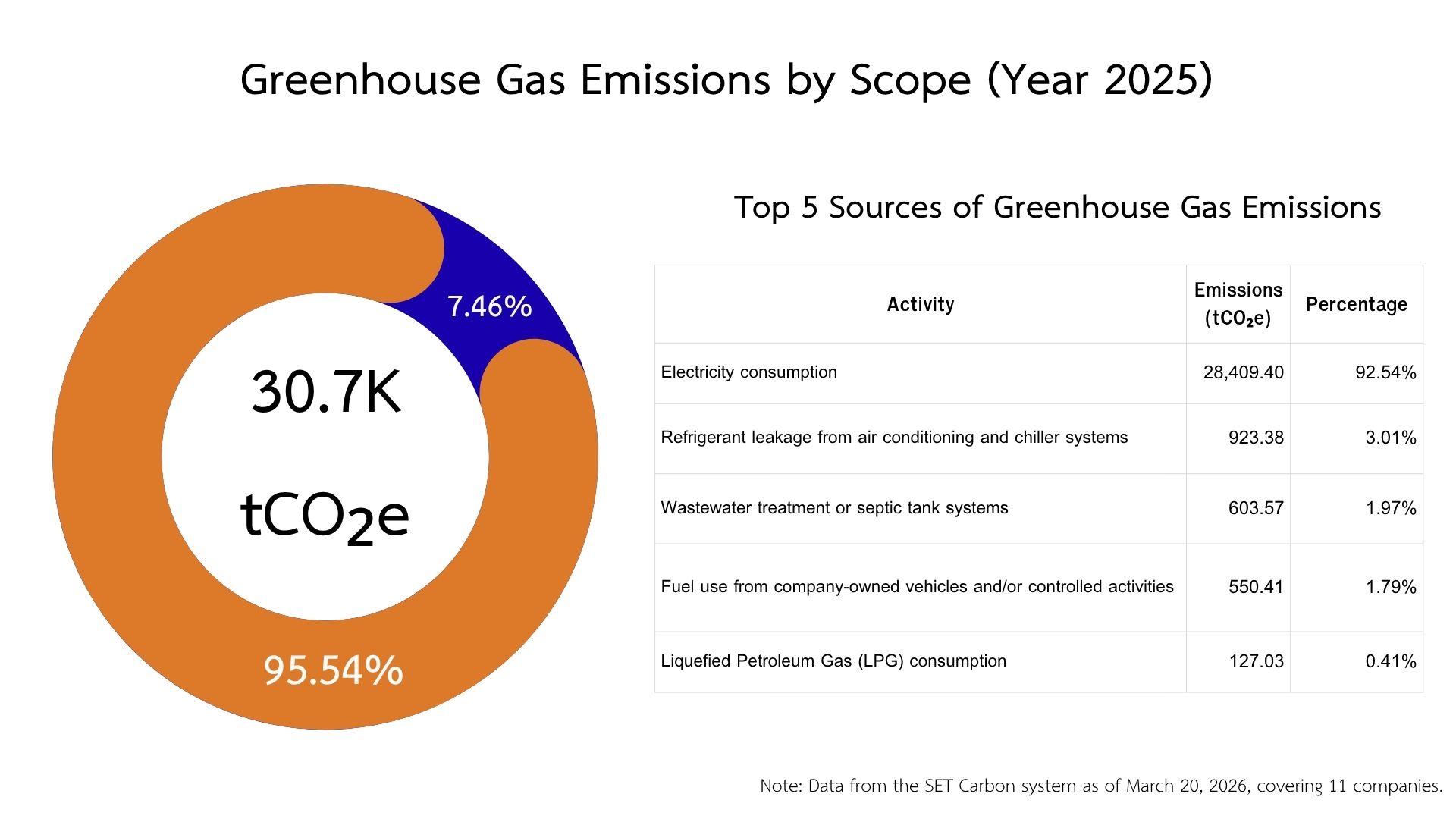
In 2025, the Company established greenhouse gas management targets, aiming to achieve Net-Zero Greenhouse Gas Emissions by 2050 and Carbon Neutrality by 2030 in order to support sustainable business operations and align with global efforts to reduce greenhouse gas emissions. During the year, the Company placed strong emphasis on systematic greenhouse gas management by measuring and collecting data on emissions generated from its organizational activities. This data is used to assess environmental impacts and support long-term emission reduction planning. The Company reported total greenhouse gas emissions of 30,700 tonnes of carbon dioxide equivalent, representing a greenhouse gas emissions intensity of 2.55 tonnes of carbon dioxide equivalent per THB 1 million in revenue. When classified by emission sources, Scope 1 accounted for 7.46%, while Scope 2 accounted for 95.54% of total emissions. This indicates that energy consumption within the organization remains the primary source of the Company’s greenhouse gas emissions.
In addition, the Company participated in the Low Emission Support Scheme (LESS) program organized by the Thailand Greenhouse Gas Management Organization, demonstrating its commitment to reducing greenhouse gas emissions from organizational activities. A total of 12 projects were implemented, including waste segregation for recycling, solar rooftop power generation, and LED lighting replacement initiatives.
The greenhouse gas emission reductions achieved by each hospital are as follows:
World Medical Hospital – 24.318 tonnes of carbon dioxide equivalent
Kasemrad International Hospital Aranyaprathet – 260.597 tonnes of carbon dioxide equivalent
Kasemrad International Hospital Rattanatibeth – 35.965 tonnes of carbon dioxide equivalent
Kasemrad Hospital Bangkae – 142.565 tonnes of carbon dioxide equivalent
Kasemrad Hospital Rattanatibeth – 61.527 tonnes of carbon dioxide equivalent
Kasemrad Hospital Prachachuen – 82.638 tonnes of carbon dioxide equivalent
Kasemrad Hospital Prachinburi – 170.167 tonnes of carbon dioxide equivalent
Kasemrad Hospital Ramkhamhaeng – 122.300 tonnes of carbon dioxide equivalent
Kasemrad Hospital Saraburi – 130.627 tonnes of carbon dioxide equivalent
Kasemrad Sriburin Hospital – 171.076 tonnes of carbon dioxide equivalent
Kasemrad Hospital Pathum Thani – 43.541 tonnes of carbon dioxide equivalent
Kasemrad Hospital Chachoengsao -27.438 tonnes of carbon dioxide equivalent
As a result of these initiatives, the company achieved a total greenhouse gas emission reduction of 1,272.760 tonnes of carbon dioxide equivalent under the Low Emission Support Scheme (LESS) program of the Thailand Greenhouse Gas Management Organization.
As a result of the Company’s strong commitment to environmental management, it received the Sustainability Disclosure Recognition 2025 from the Thaipat Institute under the Sustainability Disclosure Community initiative. This recognition affirms the Company’s transparency in sustainability disclosure and reinforces its commitment to becoming a leader in sustainable development within the healthcare service
Environmental Legal Incidents
Legal Violation Incidents
| Metric | Current Year | Previous Year | Two Years Ago |
|---|---|---|---|
| Number of cases or incidents of legal violations or negative environmental impact (cases) | 0 | 0 | 0 |
Employees — Plan & Guidelines
Has an Employee Management Plan
Yes
Plan Description
The Company recognizes its personnel as a key resource of the organization, playing a vital role in driving strategic directions and achieving sustainable business goals. Therefore, the Company focuses on organizational development alongside enhancing the capabilities of employees at all levels through both internal and external training programs, skill development aligned with the rapidly changing working environment, and continuous performance evaluation. The Company also promotes a culture of lifelong learning within the organization to strengthen the capabilities of personnel at all levels, from the Board of Directors and executives to operational staff. At the same time, the Company places strong emphasis on responsible workforce management by fostering a safe and healthy working environment and respecting the human rights of employees at all levels. Operations are conducted in accordance with nationally and internationally recognized standards, such as Hospital Accreditation (HA) and Joint Commission International (JCI). The Company has established occupational health and safety policies covering all operations and encourages employee participation in maintaining safety for themselves and others to reduce the risk of accidents and health-related impacts, while continuously promoting a safety culture across the organization. In addition, the Company adheres to human rights and labor rights principles by implementing human resource management practices that emphasize equality, non-discrimination, diversity, and support for labor rights in accordance with the principles of the International Labour Organization (ILO). In 2025, the Company received the Outstanding Organization Promoting Employment and Income Opportunities for the Elderly Award 2025 from the Ministry of Social Development and Human Security under the Aging Connect 2025 event, reflecting the Company’s commitment to responsible business conduct and creating shared value with society in a sustainable manner.
Given the specialized expertise required in healthcare services, including physicians, pharmacists, nurses, and technical staff, the company places significant emphasis on attracting and retaining employees with competitive compensation and comprehensive benefits. This is outlined in the "Employee Benefits Regulation," and the central Human Resources division oversees the welfare and benefits of both permanent and contract employees. This ensures the safeguarding of talent in the competitive industry environment and encourages long-term employee commitment to the company.
The Company’s holistic approach to organizational and personnel development, encompassing capability building, operational effectiveness, workplace safety, and employee well-being, as well as strategic incentives, reflects its unwavering commitment to fair, safe, and sustainable work environments. This foundation of responsible governance and stakeholder accountability remains central to the Company’s enduring growth and success.
Plan Document Link
https://sustainability.bangkokchainhospital.com/en/social/human-rights
Plan Areas
| Plan Area |
|---|
| Fair employee compensation |
| Employee training and development |
| Promoting employee relations and participation |
| Migrant/foreign labor |
| Child labor |
| Occupational health and safety in workplace |
Employees — Workforce
Workforce Data
| Metric | Current Year | Previous Year | Two Years Ago |
|---|---|---|---|
| Total number of employees (Persons) | 5,690 | 5,589 | 6,706 |
| Number of male employees (Persons) | 988 | 919 | 1,180 |
| Number of female employees (Persons) | 4,702 | 4,670 | 5,526 |
| Total employment of disabled persons (people) | 52 | 50 | |
| Total disabled employees (people) | 52 | 50 | |
| Total male disabled employees (people) | 29 | 25 | |
| Total female disabled employees (people) | 23 | 25 | |
| Total disabled workers who are non-employee (people) | 0 | 0 | |
| Contributions to the fund for promoting and improving the quality of life for disabled persons | 1 | 1 | 1 |
| Total number of male employees in operational level (Persons) | |||
| Total number of male employees in management level (Persons) | |||
| Total number of male employees in executive level (Persons) | |||
| Total number of female employees in operational level (Persons) | |||
| Total number of female employees in management level (Persons) | |||
| Total number of female employees in executive level (Persons) |
Employees — Remuneration & Provident Fund
Remuneration & Provident Fund
| Metric | Current Year | Previous Year | Two Years Ago |
|---|---|---|---|
| Total disabled employees (people) | 2,476,814,000 | 2,395,562,000 | 2,288,750,000 |
| Total male employee remuneration (Baht) | |||
| Total female employee remuneration (Baht) | |||
| Number of employees eligible to participate in PVD (persons) | 5,690 | 5,589 | 6,706 |
| Total number of employees joining employee provident fund (Persons) | 1,457 | 1,202 | 1,162 |
| Percentage of total number of employees joining employee provident fund to total number of employees (%) | 25.61 | 21.51 | 17.33 |
| Number of PVD members / Total eligible employees (%) | 25.61 | 21.51 | 17.33 |
| Total amount of provident fund contributed by the Company (Baht) | 163,204,030.86 | 141,838,974.31 | 122,520,184 |
| Total amount of provident fund contributed by employee (baht) | 218,190,381.89 | 187,639,804.75 | 160,528,933.65 |
Employees — Training & Development
Training Data
| Metric | Current Year | Previous Year |
|---|---|---|
| Average employee training hours (Hours / Person / Year) | 17.56 | 15.7 |
| Employee development and training expenses (baht) |
Employees — Occupational Health & Safety
Occupational Health & Safety Data
| Metric | Current Year | Previous Year | Two Years Ago |
|---|---|---|---|
| Total number of lost time injury incidents by employees (Cases) | 0 | 0 | 0 |
Employees — Labour Relations
Labour Relations Data
| Metric | Current Year | Previous Year | Two Years Ago |
|---|---|---|---|
| Total voluntary resignations (Persons) | 1,718 | 1,963 | 1,885 |
| Male employees who voluntary resigned (Persons) | 220 | 287 | 288 |
| Female employees who voluntary resigned (Persons) | 1,498 | 1,676 | 1,597 |
| Percentage of employee turnover leaving the Company voluntarily (%) | 30.19 | 35.12 | 28.11 |
| Evaluation result of employee engagement | 1 | 1 | 1 |
Employees — Employee Representation
Employees Are Represented Collectively
Yes
Forms of Representation
| Form |
|---|
| Welfare committee |
Employees — Targets
Has Set Employee Targets
Yes
Targets
| Indicator | Target Areas | Target Year | Target Year — Description |
|---|---|---|---|
| Employee training hours | 2984 · Description: Employee training and development | 2,025 | Employees received an average of no less than 12 hours of training per person per year. |
Employees — Performance & Outcomes
Has Performance Results
Yes
Performance Description
In 2025, the Company implemented comprehensive human resource development and management measures to enhance capabilities and boost morale among employees at all levels. These initiatives covered both internal and external training programs aligned with professional requirements and the rapidly changing work environment, as well as annual performance evaluations. In the past year, a total of 4,435 employees underwent performance appraisal, representing 63.54% of the workforce. The Company has also advanced its workplace environment in line with health and safety standards under HA and JCI frameworks, supported by occupational health, safety, and labor rights policies that uphold equality, non-discrimination, and strict respect for human rights. To further strengthen employee competencies, the Company has implemented key training programs, including:
• MINI MBA INNOVATEMED: Sustainable Healthcare Management
A collaboration with Bangkok University Graduate School to develop modern business management knowledge with a focus on strategic analysis, planning, resource management, and evaluation to empower personnel for sustainable competitiveness in the healthcare industry.
• Advanced Cardiovascular Life Support (ACLS)
Training for physicians, nurses, and healthcare professionals under the certification of the Thai Resuscitation Council (TRC), emphasizing CPR, AED usage, and effective circulatory system restoration.
• Inpatient Infection Control
A program enhancing knowledge of patient care standards to improve safety, minimize infection risks in hospitals, and equip nurses with rigorous infection control skills.
• Sleep Test Analysis
Training on sleep disorders, proper use of diagnostic tools, and interpretation techniques in preparation for launching a sleep analysis center.
• Excellence Service Behavior (ESB)
A course designed to strengthen service skills, including customer response, managing challenging situations, and building client confidence professionally.
• Personal Data Protection Act (PDPA) Knowledge Training
Aimed at raising awareness among employees regarding the lawful management of patients’ personal data, including rights of data owners, collection, usage, and secure disclosure.
The Company places strong emphasis on motivating and retaining its employees through various recognition programs and welfare initiatives. These include the “Nurse Kasemrad Awards 2025”, which recognizes nurses who demonstrate outstanding performance in patient care quality and service excellence, as well as activities that strengthen employee engagement such as New Year celebrations, internal sports events, and recreational activities to foster a friendly organizational culture and promote workplace well-being. In addition, the Company supports its employees and the community through initiatives such as flood relief assistance in Chiang Rai Province, the “Friends Helping Friends” program to support employees facing emergencies, and the “Kasemrad Children’s Scholarship” program, which provides educational support for employees’ children. The Company’s commitment to employee well-being and a positive work environment is further reflected in the achievements of its affiliated hospitals. Notably, Kasemrad Hospital Sriburin received the 2025 “Good Level” Award, as well as awards for Outstanding Workplace in Labor Relations and Welfare and Safe Workplace Model of Chiang Rai Province, demonstrating the organization’s strong labor management and workplace safety standards.
Customers — Plan & Guidelines
Has a Customer Management Plan
Yes
Plan Description
The Company places strong emphasis on its responsibility to patients and the quality of healthcare services. Hospitals within the network prioritize patient safety as the highest priority. The Company therefore establishes policies and guidelines for healthcare service quality control in alignment with both national and international standards to reduce potential risks to patients and the organization. In addition, service processes are continuously improved to enhance service quality, patient safety, and access to medical services. Key initiatives are as follows:
Healthcare quality accreditation, such as Hospital Accreditation (HA) from the Healthcare Accreditation Institute and Joint Commission International (JCI), to further enhance the standards of patient care.
Enhancement of medical laboratory safety standards, with Kasemrad Hospital Pathumthani obtaining ISO 15189 and ISO 15190 certifications and signing a Memorandum of Understanding (MOU) under the “Urban Hospital Policy Driving Project, Pathumthani Province, for Critical and Emergency Patients” to strengthen confidence in the management of critical and emergency patient care.
Development of international collaboration in cancer treatment, with World Medical Hospital signing a Memorandum of Understanding with Modern Cancer Hospital Guangzhou to enhance treatment capabilities and patient referral services of the WMC New Frontier Cancer Center.
Development of a specialized center for body contouring services, with Kasemrad Hospital Prachachuen collaborating with La Ferly Clinic to launch the KLS Kasemrad Liposuction and Slimming Center BY La Ferly, providing comprehensive body contouring services.
Medical laboratory quality certification, with Kasemrad International Hospital Aranyaprathet receiving the Quality Management System Certification for Medical Technology Standards 2022 for medical laboratories from the Medical Technology Council at the THAILAND LA FORUM 2025.
In terms of customer relationship management (CRM), the company has implemented continuous efforts focusing on improving patient satisfaction while maintaining high standards of quality, safety, and reliability critical factors in building trust and long-term loyalty. The company applies the “HAPPY” framework to evaluate patient experience across five dimensions
• Honest: Delivering services with integrity
• Attentive: Caring and proactive support without prompting
• Professional: A competent and credible team of professionals
• Progressive: Capable of identifying and resolving issues appropriately
• Youthful: Energetic, enthusiastic, and engaging service delivery
Recognizing the importance of enhancing treatment efficiency and accessibility to healthcare, the company integrates advanced technologies with the expertise of medical professionals. It also expands its service coverage by opening specialized medical centers and establishing new branches in various areas. These initiatives align with the company’s core objective of improving patients’ quality of life and enabling them to return to normalcy, while offering a superior treatment experience that sets the company apart from general hospitals.
In terms of information management, which is a key element in business operations and service delivery, the Company has implemented strict measures to protect and secure information by adopting advanced cybersecurity technologies, while strictly complying with relevant laws and regulations to ensure that personal data of patients and stakeholders is appropriately protected. The Company also provides channels for feedback and complaints to support continuous service improvement and conducts employee training on data leakage prevention and responses to information security threats. In addition, the Company has developed the e-Refer system, an innovation resulting from research and development (R&D), to address delays in the referral process for cancer patients. The system serves as a digital platform that connects diagnostic information and treatment plans within the hospital network, enabling physicians to plan treatments more accurately, reduce treatment delays, and enhance patient safety.
Plan Document Link
https://sustainability.bangkokchainhospital.com/en/governance-and-economic/service-quality-and-responsibility-to-patients
Plan Areas
| Plan Area |
|---|
| Responsible production and services for customers |
| Communication of product and service impacts to customers/consumers |
| Development of customer satisfaction and customer relationship |
| Protection of customer personal information |
Customers — Satisfaction Results
Customer Satisfaction Results
| Metric | Current Year | Previous Year | Two Years Ago |
|---|---|---|---|
| Evaluation results of customer satisfaction | 1 | 1 | 1 |
Customers — Targets
Has Set Customer Targets
Yes
Targets
| Indicator | Target Areas | Target Year | Target Year — Description |
|---|---|---|---|
| Customer Satisfaction Level | 3009 · Description: Development of customer satisfaction and customer relationship | 2,025 | The Company places strong emphasis on enhancing customer satisfaction and has set a target to achieve a customer satisfaction score of no less than 80%. |
Customers — Performance & Outcomes
Has Performance Results
Yes
Performance Description
The company has adopted a proactive approach in continuously enhancing the quality of healthcare services and patient care. Emphasis has been placed on elevating the standards of medical treatment by integrating advanced medical innovations and cutting-edge technologies into the patient care process. Concurrently, internal management systems have been developed to operate with greater efficiency. Furthermore, the company has expanded its branches and specialized medical centers to meet the increasing demand for healthcare services. These initiatives aim to reinforce patient safety and ensure robust information security.
Customer Satisfaction Survey 2025
Based on the customer satisfaction survey conducted in 2025, the Company achieved an overall satisfaction rate of 85.13% among service users. Throughout the year, a total of 4,320 feedback cases were recorded, comprising 2,680 suggestions (62.04%) and 1,640 compliments (37.96%). These results reflect customers’ trust and satisfaction with the quality of the Company’s services, while also highlighting opportunities for continuous improvement and development to better meet customer needs in a sustainable manner.
Innovation and Technology Development Projects
The company places strong emphasis on advancing innovation and technology as a critical mechanism for the development of medical services. By integrating state-of-the-art medical technologies with the expertise of specialized physicians, the company aims to enhance the effectiveness of treatment and improve patients' quality of life, enabling them to return to normal living. Moreover, this approach fosters a distinctive and superior service experience, setting the company apart from general hospitals. In pursuit of these goals, the company has strengthened its administrative capacity and established specialized medical service centers, while also expanding services across all affiliated business units. The following outlines key developments:
Kasemrad Ari Radiation Therapy Specialty Clinic
The company has launched the Kasemrad Ari Radiation Therapy Specialty Clinic, the first of its kind in Nonthaburi Province offering comprehensive radiation therapy services. The clinic is designed to treat cancer patients and those requiring radiation therapy, equipped with cutting-edge medical technologies such as 3D treatment planning systems, high-energy intensity-modulated radiation therapy (IMRT), and image-guided radiation therapy (IGRT) systems. These technologies ensure high precision in treatment, minimize damage to surrounding tissues, and enhance disease control effectiveness.
Cell Harvesting Center
In response to the evolving needs of society and public health particularly in the face of emerging diseases, mutations, and Thailand's full transition into an aging society by 2024 the company has partnered with MEDEZE Group, a national leader in cellular technology, to establish the Cell Harvesting Center. This center offers high-standard, secure services in stem cell and immune cell banking, supported by stringent quality control measures throughout the entire process and in line with international standards.
Kasemrad Plastic Surgery (KPS) and Aesthetic Center
To elevate Thailand’s plastic surgery standards to the international level, Kasemrad Hospital Group has collaborated with the Kasemrad Plastic Surgery (KPS) Center and the Korean College of Cosmetic Surgery (KCCS). Through a signed Memorandum of Understanding (MOU), the parties will promote the exchange of knowledge on surgical techniques, medical expertise, and innovative surgical instruments and technologies.
WMC New Frontier Cancer Center
Bangkok Chain Hospital Public Company Limited continues to advance healthcare innovation. Most recently, World Medical Hospital launched the WMC New Frontier Cancer Center, a cancer treatment center that integrates conventional medicine, alternative therapies, and the latest medical innovations to deliver comprehensive and personalized cancer care.
Comprehensive Cardiac Center
The company has expanded its service scope by launching a Comprehensive Cardiac Center at Kasemrad Hospital Chachoengsao, with the goal of delivering high-standard care for patients with heart conditions. The center also serves as a referral hub for hospitals in the region, strengthening the local healthcare system and providing both primary and advanced cardiac care.
Mobile Dental Unit
The company places great emphasis on expanding and enhancing access to comprehensive dental services through its mobile dental unit operations, managed by Bangkok Chain Dental Co., Ltd. These units provide a full range of dental care services, including oral health examinations, dental scaling, fillings, extractions, and other related treatments. The initiative focuses on reaching target groups in areas where access to dental services may be limited, such as schools, factories, and local communities. This approach aims to reduce disparities in access to oral healthcare and to promote long-term oral health and well-being among the population.
Kasemrad App
Developed by Health Chain Innotech Co., Ltd, the Kasemrad App enhances the healthcare experience by offering users convenience and high service efficiency. It integrates innovative health technology to support a full spectrum of care, enabling users to access hospital services easily, quickly, and securely.
E-Refer system
The e-Refer system is an innovation developed by the Company to enhance the efficiency of patient referral processes within the hospital network. By connecting diagnostic information and treatment plans through a digital platform, physicians are able to access patient information in advance and plan appropriate treatments. The system helps reduce treatment delays, improve continuity and safety in patient care, and enhance the overall quality of healthcare services and patient experience in a systematic manner.
Diabetic Foot Ulcer Treatment Technology
World Medical Hospital offers a comprehensive range of services for the treatment, rehabilitation, and quality-of-life enhancement of patients with diabetic foot ulcers. The services are led by experienced specialists and a multidisciplinary medical team trained in specific areas of wound care. The center provides professional consultation and continuous care for infected and chronic wounds, ensuring holistic management of diabetic foot ulcers.
Blastocyst Culture Technology
World Medical Hospital has enhanced its medical service capabilities to support individuals facing infertility by establishing a fertility treatment center. The center offers end-to-end services, from diagnosis to treatment, using advanced medical technologies such as blastocyst culture, which involves culturing embryos to their optimal implantation stage, thereby increasing the chances of successful pregnancy.
Neuro-Rehabilitation Robotics Technology
World Medical Hospital has launched robotic-assisted neuro-rehabilitation services for patients with mobility impairments such as those recovering from strokes or spinal cord injuries using the Cyberdyne Hybrid Assistive Limb (HAL). This system combines robotic physical therapy with neuro-controlled signals received through the patient's skin, enhancing joint movement, core muscles, and hip strength. Consistent therapy with the HAL system increases the likelihood of patients regaining normal mobility.
The Life-Saving Technology of Extracorporeal Membrane Oxygenation (ECMO)
Kasemrad Hospital Bangkae has implemented the ECMO (Extracorporeal Membrane Oxygenation) technology, also known as the artificial lung and heart machine, for the treatment of patients suffering from severe heart failure or respiratory failure. The ECMO machine functions by circulating blood and providing oxygen to the body externally, thereby reducing the workload of the heart and lungs. This enables the restoration and recovery of damaged organs and helps save the lives of patients in critical conditions. The ECMO technology also allows the medical team to manage patients in critical conditions with high efficiency and safety. It increases the chances of survival and aids in the rehabilitation of the patient's physical condition, ultimately enhancing their quality of life.
PACS System (Picture Archiving and Communication System)
The PACS System is utilized for storing and managing medical images and for transmitting DICOM-standard image data across the hospital network. It enables medical imaging to be reviewed across departments, enhancing treatment follow-up efficiency. The Diagnostic Imaging Center at World Medical Hospital uses this system for organized image storage and rapid retrieval, particularly for radiographic and diagnostic imaging results.
Minimally Invasive Surgery (MIS)
Hospitals within the group offer Minimally Invasive Surgery (MIS) techniques that involve small incisions and advanced camera-assisted procedures. These include endoscopic spine surgery, urologic endoscopy, general laparoscopic surgery, and gynecologic laparoscopy. MIS significantly reduces recovery time and allows patients to resume normal activities faster.
Prostate Water Vapor Therapy: Rezum
Rezum therapy provides a safe, simple, and non-surgical option for treating benign prostatic hyperplasia (BPH). This technique utilizes water vapor therapy, offering an alternative for those who do not want surgery or medication due to concerns about side effects.
Sleep Test for Sleep Disorders
The Sleep Test is a diagnostic medical procedure used to detect abnormalities during sleep. It evaluates the functions of various body systems, including respiration, brain wave activity, heart rate, oxygen saturation, and muscle movement, in order to diagnose conditions such as snoring and obstructive sleep apnea (OSA), which can severely impact quality of life.
Cybersecurity Management Program
The company places utmost importance on the management of information systems, which are integral to business operations and service delivery to all stakeholders particularly in relation to patient data and information critical to executive decision-making processes. To safeguard such data from cyber threats and unauthorized access, the company has implemented modern security measures and strictly adheres to applicable legal and regulatory requirements. These efforts aim to ensure that all patient and stakeholder data are appropriately and securely protected.
Deployment of Threat Detection and Anti-Malware Software
All affiliated hospitals have implemented advanced antivirus and cyber threat protection systems to enhance cybersecurity. The company utilizes high-performance software such as Eset node32 , Kaspersky (EDR) , SANGFOR (EDR) (Firewall Protection System), which effectively detect, prevent, and eliminate malware and other cyber threats. These systems improve the organization's capacity to identify and respond to increasingly complex threats, particularly those targeting web applications and digital services. This initiative is fully aligned with the company's information security policy.
Cyber Resilience Survey Initiative
To strengthen the organization’s ability to prevent and respond to cyber threats effectively, Bangkok Chain Hospital Public Company Limited conducted a Cyber Resilience Survey across all branches. This survey aims to assess the readiness level of the organization’s IT infrastructure, as well as staff awareness and understanding of cyber risk management practices in various scenarios. The assessment not only evaluates the robustness of cybersecurity infrastructure but also serves as a tool for identifying potential vulnerabilities and areas for improvement in technology, operational processes, and personnel knowledge. The findings will inform the development of a comprehensive and strategic improvement plan to enhance the organization's cyber resilience in the long term. This also fosters a culture of cybersecurity awareness across all levels of the organization, in alignment with the rapidly evolving and complex nature of digital threats.
Data Protection and Cybersecurity Training Program
Recognizing the critical importance of protecting personal data, particularly that of patients, clients, business partners, employees, and all stakeholders, Bangkok Chain Hospital Public Company Limited has implemented training programs focused on the Personal Data Protection Act (PDPA). These programs aim to promote legal compliance, as well as raise awareness and understanding among hospital personnel regarding appropriate data handling practices and the prevention of data breaches. Throughout the year, the company has conducted a total of 68 training hours, which forms part of its long-term commitment to cultivating a strong internal culture of data protection and privacy.
The company’s concrete efforts in customer service management have earned widespread recognition for its commitment to patient-centered care emphasizing safety, convenience, and effective communication. The service process has been comprehensively developed to include modern appointment systems, consistent follow-up of treatment outcomes, and structured mechanisms for receiving and integrating patient feedback for continuous service improvement. This unwavering commitment is exemplified by Kasemrad Prachachuen Hospital being honored with the “Preferred Healthcare Facility” award an affirmation of the hospital’s quality service standards and its ability to consistently meet patient expectations in a sustainable and efficient manner.
Community & Social — Plan & Guidelines
Has a Community & Social Plan
Yes
Plan Description
The Company recognizes that building a strong and sustainable society cannot be achieved in isolation. Therefore, in addition to initiating its own social projects, the Company places great importance on fostering partnerships and supporting agencies and organizations that play a key role in driving social development. This collaborative approach enhances the effectiveness of social initiatives and amplifies their impact to benefit society in a tangible and widespread manner. At the same time, the Company instills a sense of social responsibility among its employees by providing continuous opportunities to participate in social activities. This encourages volunteerism and awareness of their roles in contributing to societal development. The Company regards employees as vital drivers in advancing its social mission effectively and sustainably.
In managing social activities and community development, the Company has assigned the Environmental Committee as the main body responsible for assessing circumstances and factors that may affect the environment and the safety of surrounding communities as a result of the Company’s operations. The Committee also plays a key role in defining strategic directions, implementing social projects, and serving as a representative of the Company in communicating and promoting employee participation in comprehensive social and community development initiatives.
Furthermore, the Company operates strictly within the legal frameworks and regulatory requirements of relevant authorities. It is committed to the principles of sustainable social, community, and environmental development. The Company actively supports initiatives that promote the conservation and responsible use of natural resources, youth education, and public benefit activities in underprivileged areas to enhance community resilience and long-term self-reliance.
Plan Document Link
https://sustainability.bangkokchainhospital.com/en/social/community-development-and-engagement
Plan Areas
| Plan Area |
|---|
| Employment and professional skill development |
| Education |
| Religion and culture |
| Forests and natural resources |
| Sports and recreation |
| Occupational health, safety, health, and quality of life |
| Disadvantaged and vulnerable groups |
| Water and sanitation management |
| Reducing inequality and promoting social equality |
Community & Social — Targets
Has Set Community & Social Targets
Yes
Targets
| Indicator | Target Areas | Target Year | Target Year — Description |
|---|---|---|---|
| Organize over 100 health education activities annually. | 3045 · Other name: Organize health education activities. · Description: Others | 2,025 | Organize over 100 health education activities annually. |
Community & Social — Performance & Outcomes
Has Performance Results
Yes
Performance Description
The company places great importance on contributing to sustainable community and social development alongside its business operations. It has implemented various initiatives aimed at improving the quality of life within communities and strengthening society in key areas such as the economy, public health, education, and the environment. These efforts are carried out in collaboration with public agencies, private entities, and civil society organizations. In 2025, the company implemented a variety of socially driven projects across multiple dimensions, including
Blood Donation Campaigns
Hospitals within the company’s network collaborated with the Thai Red Cross Society and government agencies to organize blood donation drives. These initiatives aim to save lives and encourage public participation in altruistic acts. Blood donation plays a critical role in emergency medical care and promotes societal solidarity. Projects such as Health Blood Hero, Save a Life Give Blood, and Give Blood, Save Lives highlight the value of blood donation as a life-saving act that benefits the wider community.
Charity Runs
Company affiliated hospitals supported charity runs organized by various organizations by providing emergency medical services, pre-run health checks, and first aid stations. Additionally, they offered runners vitamin water and cooling towels. These activities promote physical fitness and healthy lifestyles among youth and the general public, encouraging greater participation in physical exercise through walking and running.
Quality Mothers Program
This monthly program, held by hospitals within the company, offers free educational sessions for pregnant mothers, led by specialized physicians. Topics include pregnancy care, baby bathing demonstrations, exercises to relieve pregnancy related pain, and proper nutrition during pregnancy. These sessions combine expert lectures with hands-on workshops under the theme of the “Nine Miraculous Months,” aiming to support maternal and child health.
Mobile Health Check-Up Units
Hospitals organized outreach programs offering health screenings and seasonal flu vaccinations to local schools, temples, nearby communities, and interested individuals. These initiatives aim to promote early detection of health issues and build immunity, thereby reducing the risk of severe illness and fatalities associated with influenza-related complications throughout the year.
Donations of Supplies and Financial Support
Hospitals conducted donation campaigns to provide essential supplies and equipment such as hospital beds, wheelchairs, medications, and medical supplies to schools, shelters, and government agencies. Financial donations were also made to support education, government agency operations, and the preservation of Buddhism.
Public Health Education Activities
Public health awareness seminars were organized by company-affiliated hospitals, with presentations delivered by medical specialists and experienced guest speakers. These events aimed to raise awareness about the importance of regular health check-ups and timely access to medical care, while also providing guidance on maintaining a healthy lifestyle.
The company’s commitment to fostering quality public health goes hand in hand with its broader societal development efforts. This includes support for charitable activities, improving the quality of life of the population, promoting preventive healthcare, and enhancing community-level development. The consistency and sincerity with which these initiatives are carried out have earned public recognition and affirm the company’s success in sustainable management. They also reflect the company’s strong commitment to creating shared value with society across all dimensions.
Law Violation Incidents
Law Violation Incidents
| Metric | Current Year | Previous Year | Two Years Ago |
|---|---|---|---|
| The total number of cases or incidents of significant violations of laws or regulations regarding social and human rights (Cases) | 0 | 0 | 0 |
| The total number of cases or incidents that cause significant labor disputes (Cases) | 0 | 0 | 0 |
| The total number of cases or complaints related to consumer rights violations (Cases) | |||
| The total number of cases or complaints related to partner rights violations (Cases) | |||
| The total number of cases or incidents that cause disputes with the community/society (Cases) | |||
| The total number of cases or incidents related to cyber security or customer data breaches (Cases) | |||
| The total number of cases or incidents related to safety and occupational health at work (Cases) |